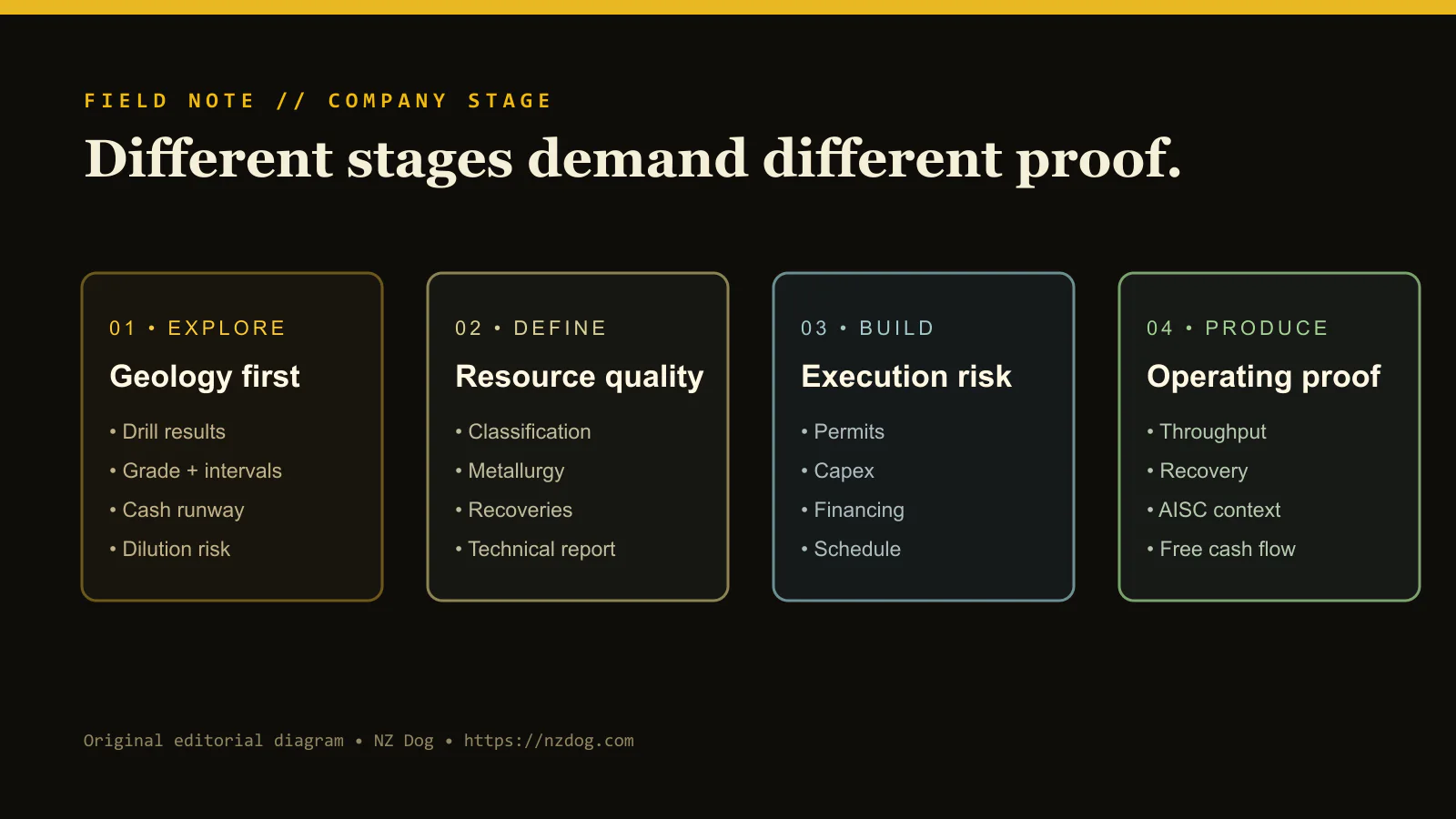
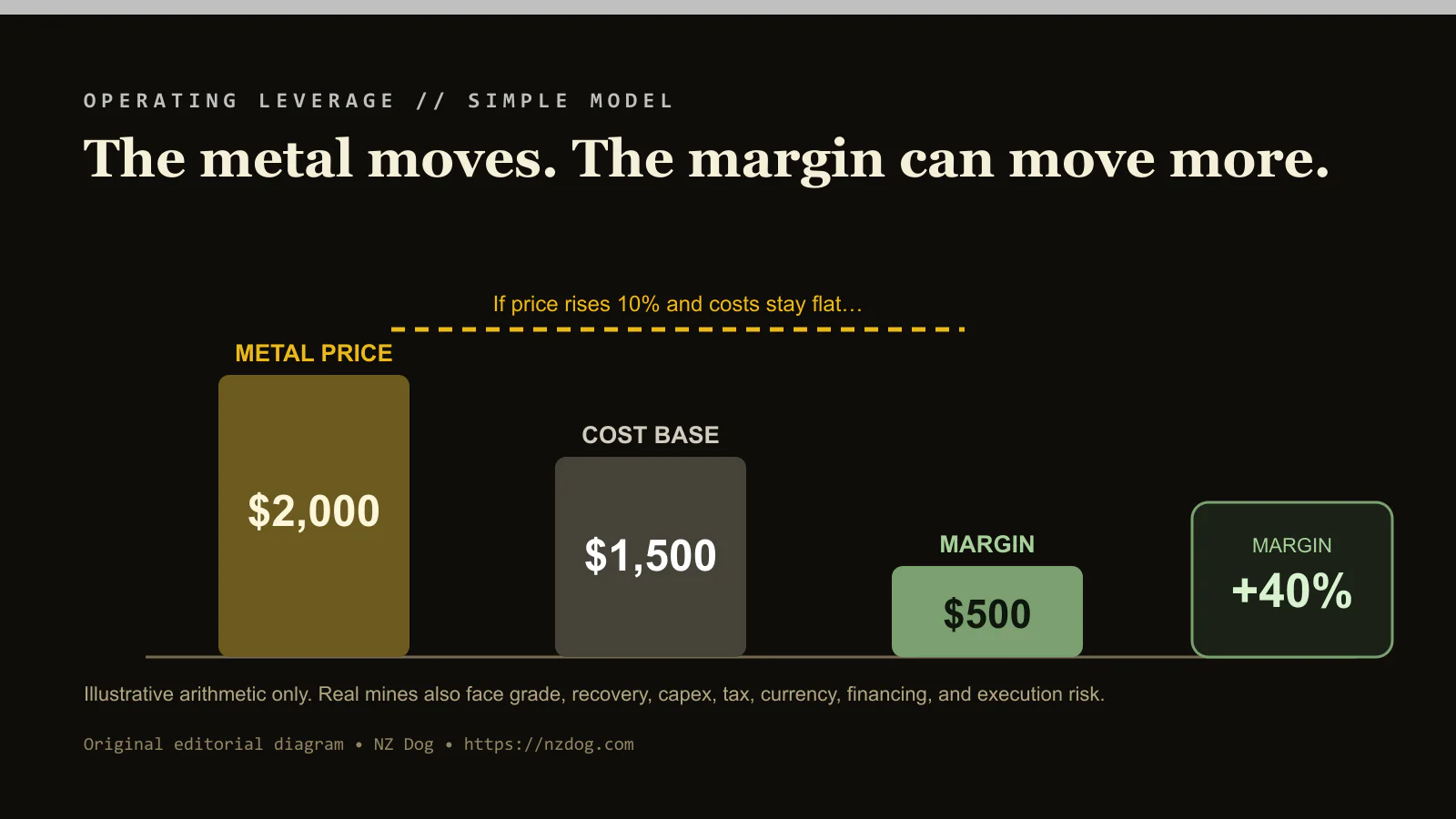
Online Tools for Mining Research: A Filing-First Workflow
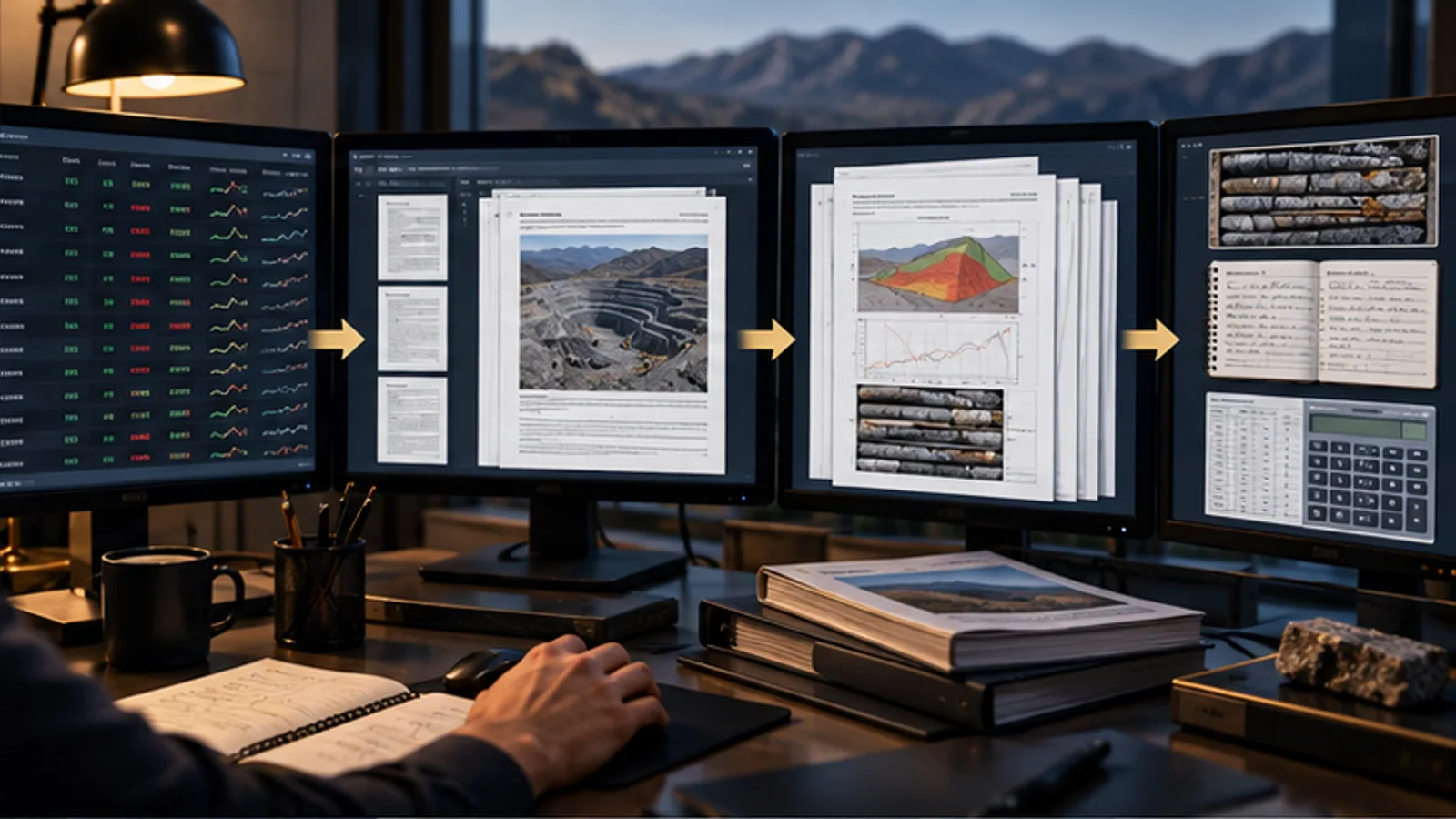
Image: NZ Dog
Online tools can make mining research faster, but speed is not the same as reliability. A screener may carry stale production, a price feed may use a different currency, and a database may copy a company-defined cost metric without its reconciliation.
This guide describes a research process, not a stock-selection system or recommendation.
Source check: 27 July 2026.
Layer 1: official filing systems
Start with the venue where the issuer files:
- SEC EDGAR for U.S. reporting companies;
- SEDAR+ for Canadian filings;
- ASX market announcements for Australian-listed issuers;
- the relevant exchange or regulator for another listing.
Capture the document title, filing date, reporting period, direct link, and any effective date. For a technical report, record the qualified person, reporting code, commodity-price assumptions, cutoff grade, and whether the document reports an exploration target, mineral resource, or mineral reserve.
Layer 2: issuer documents
Use the company’s investor-relations site to locate annual and interim reports, technical reports, presentations, and releases. Reconcile promotional slides to the filed document. If a presentation says “low cost,” find the numeric definition and audited or reconciled measure.
Company guidance is not an observed result. Keep guidance in a separate field with its publication date and later compare it with actual results.
Layer 3: screeners and data services
Screeners are useful for discovery: exchange, market capitalization, commodity label, location, or production stage can narrow a list. Their fields should be treated as leads until verified.
Common problems include:
- stale shares outstanding and therefore stale market capitalization;
- consolidated production shown as attributable production;
- resources added to reserves;
- ounces or pounds mixed with tonnes;
- U.S., Canadian, and Australian dollars combined;
- AISC compared across issuers without definitions;
- a “silver” label despite material revenue from other metals.
Record the provider and retrieval time, then replace material screener values with primary-source values where possible.
Layer 4: a source log
A spreadsheet or database can use one row per fact:
| Field | Purpose |
|---|---|
| Issuer and identifier | Prevent ticker or name confusion |
| Value and unit | Preserve what was reported |
| Period and effective date | Prevent stale comparisons |
| Source link and page | Make verification repeatable |
| Evidence type | Observed, guidance, estimate, scenario, or editorial |
| Formula | Expose any transformation |
| Verification status | Verified, conflicting, missing, or stale |
| Notes | Record definition and limitations |
Never overwrite an old value without preserving its date and source. A history makes revisions and missed guidance visible.
Layer 5: review triggers, not trade signals
A review trigger says when to reopen the evidence. Examples include:
- a new annual, quarterly, or technical filing;
- production or cost guidance changed;
- a permit decision was published;
- capital cost or financing terms changed;
- a resource or reserve estimate received a new effective date;
- share count or project ownership changed;
- a source field passed its staleness threshold.
A price move can also prompt review, but it does not explain itself. Check company news, commodity exposure, liquidity, financing, and the broader market before assigning a cause.
Quality-control routine
For every material comparison:
- use the same currency, unit, period, and ownership basis;
- preserve issuer definitions;
- distinguish actuals from guidance and scenarios;
- reconcile calculations to their inputs;
- list missing or conflicting evidence;
- record who checked it and when.
NZ Dog’s proposed MIS dashboard is intended to support this kind of provenance-led workflow, but it remains in development. It should not be treated as a live or validated data source unless a later release explicitly documents that status.
Primary and authoritative sources
mining screenerwatchlistresearch toolsgold stocksinvesting education