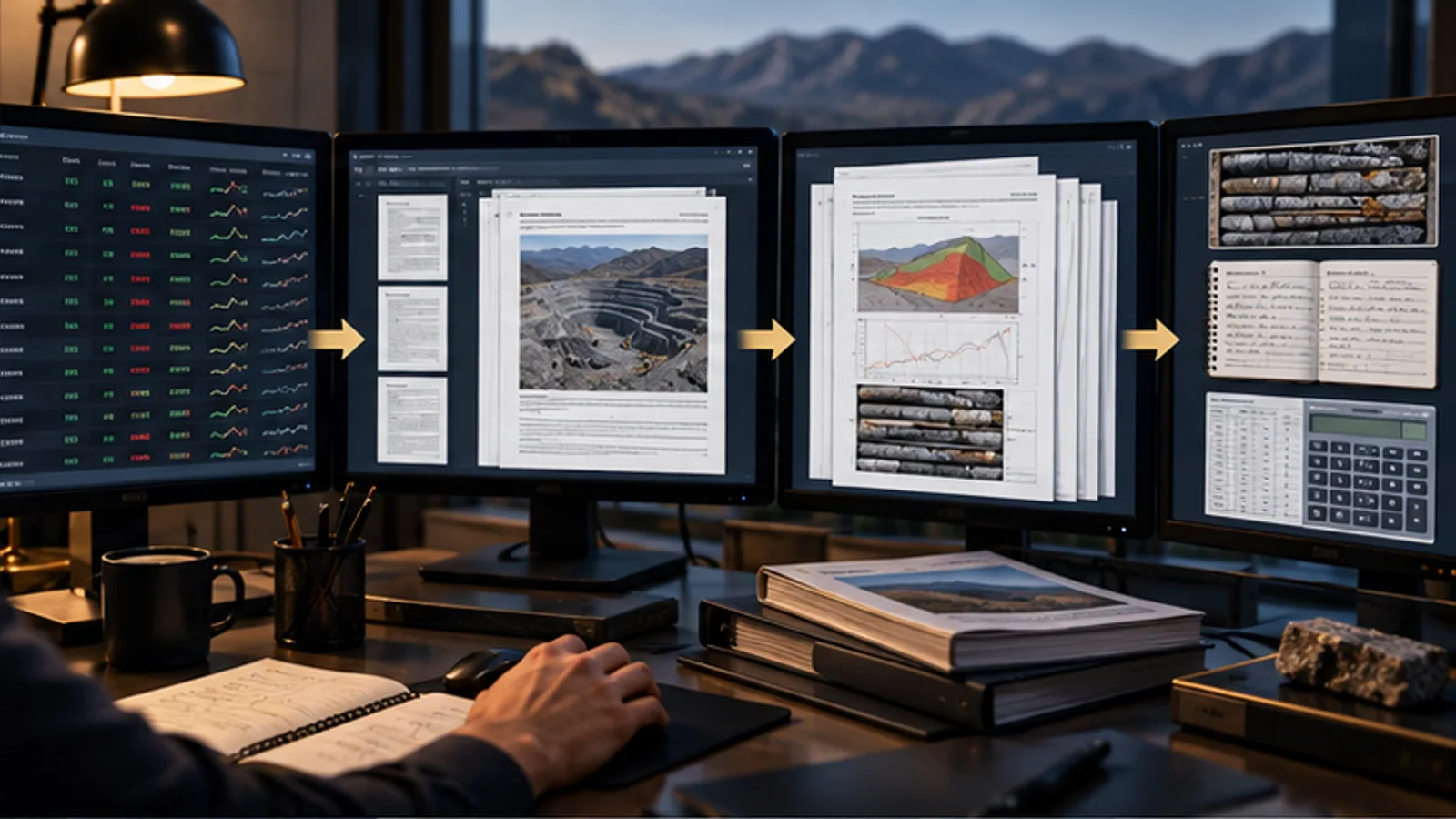
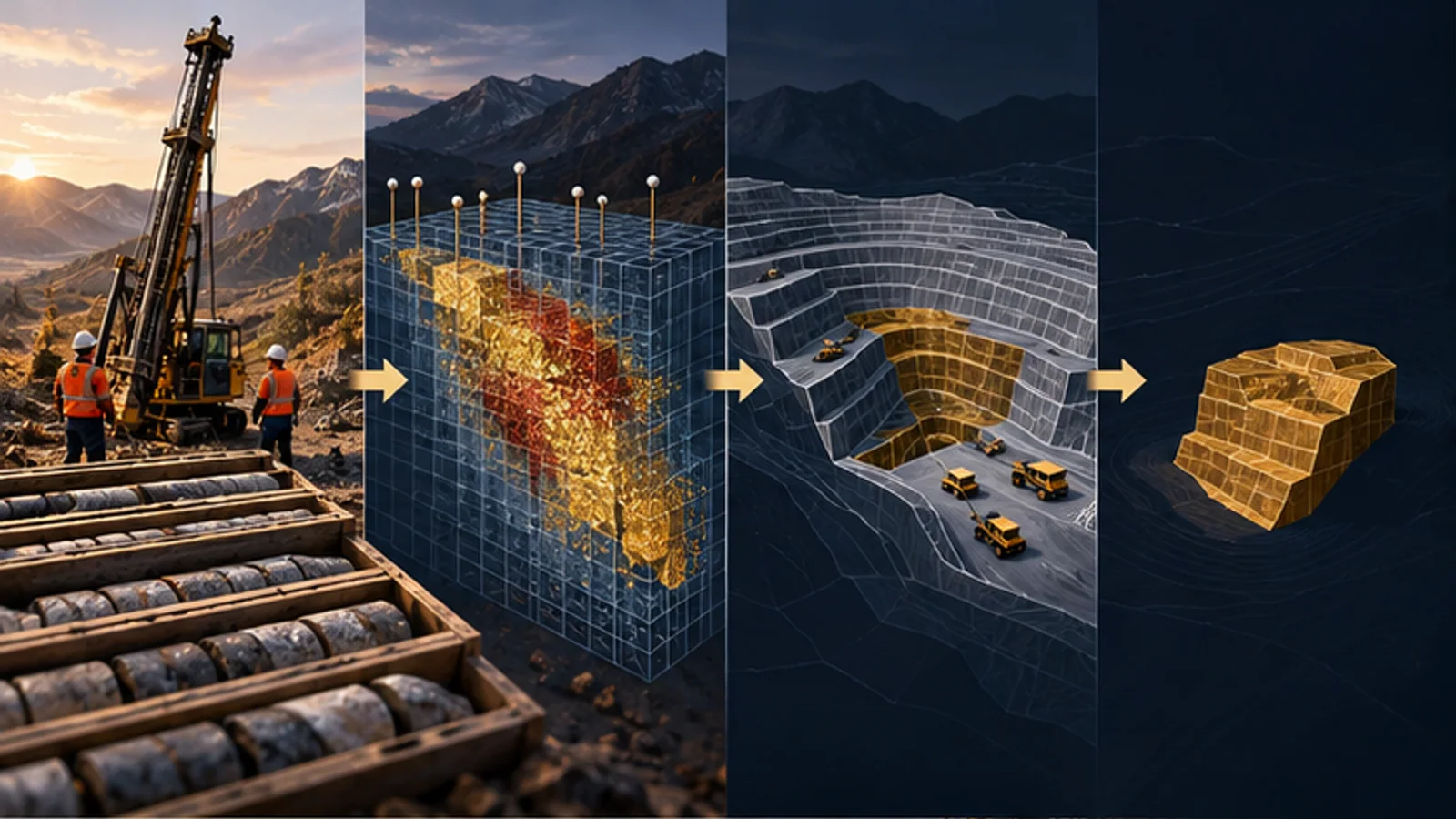
How to Read a Gold or Silver Mining Equity
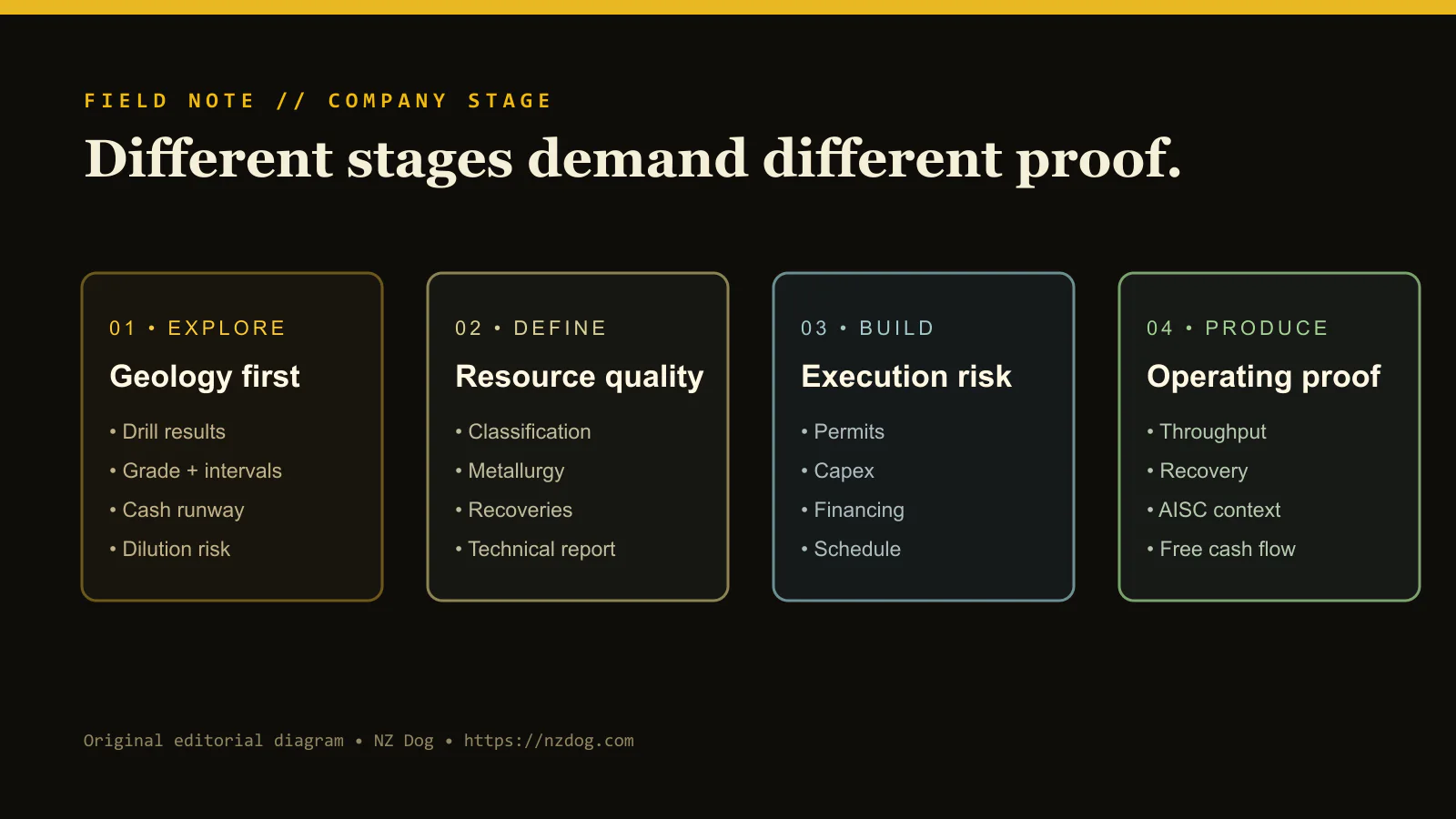
Image: NZ Dog
Two companies can both describe themselves as gold miners while presenting completely different risks. One may operate several mines. Another may be financing construction. A third may hold early exploration claims with no mineral reserve.
This is a research method, not a recommendation or personalized financial advice.
Source check: 27 July 2026.
Step 1: identify the business stage
- Producer: sells payable metal. Verify actual production, realized price, cost, recovery, capital spending, and cash flow.
- Developer: has a studied project but may still need permits, financing, construction, and commissioning.
- Explorer: tests geological targets. A drill result is not a mineral resource, and a resource is not automatically a reserve.
- Royalty or streaming company: owns contractual interests in project revenue or metal delivery rather than operating the mine. Contract terms and counterparty assets drive value.
Use the latest annual and interim filings to confirm the stage. A presentation may mix operating assets, optional projects, and exploration targets.
Step 2: read the technical evidence
For a material U.S. mining property, the SEC’s Subpart 1300 framework can require a dated and signed technical report summary prepared by a qualified person. The SEC’s small-entity compliance guide explains that mineral resources and mineral reserves require defined evidence and that a technical report may be filed when first disclosed or materially changed.
Record:
- effective date and author qualifications;
- resource and reserve categories;
- cutoff grade and commodity-price assumptions;
- mining and processing method;
- grade, recovery, dilution, and payability;
- infrastructure, water, power, and tailings;
- capital and operating cost basis;
- environmental, permitting, and social assumptions;
- sensitivity tables and stated risks.
Never add exploration targets to resources or resources to reserves.
Step 3: reconcile operating metrics
All-in sustaining cost is a non-GAAP or non-IFRS metric with issuer-specific definitions. Compare it with audited cost of sales, cash flow from operations, and capital expenditure.
Ask:
- Is the figure per produced or sold ounce?
- Which by-product credits reduce it?
- Which corporate, exploration, closure, or growth costs are excluded?
- Is it mine-level or consolidated?
- Did reported results meet prior guidance?
Grade matters only with recovery, throughput, dilution, and cost. A high-grade narrow deposit can be difficult to mine; a lower-grade bulk deposit can be economic at scale.
Step 4: test the balance sheet
For a producer, compare cash, debt maturities, interest, sustaining capital, reclamation obligations, and free-cash-flow definitions. For a developer, compare available liquidity with remaining construction capital plus contingency and working capital.
For every company, track share count over time, options and warrants, convertibles, at-the-market facilities, royalties, streams, and project-level ownership. A project can advance while per-share exposure shrinks.
Step 5: map jurisdiction and concentration
Jurisdiction is not a one-word score. Examine permit status, fiscal terms, royalties, export rules, security, water, community agreements, indigenous rights, infrastructure, and enforcement. A multi-country producer can still rely on one mine for most cash flow.
Step 6: use source hierarchy
Start with:
- SEC EDGAR for U.S. filings;
- SEDAR+ for Canadian filings;
- ASX market announcements for Australian-listed issuers;
- the relevant exchange or regulator for other listings.
Then use the issuer site to locate the same documents. Treat interviews, newsletters, social posts, and screeners as discovery tools, not proof.
A one-page reading template
Write one dated page with the business stage, attributable ownership, current production or next milestone, technical-report date, reserve and resource basis, realized prices, cost reconciliation, capital needs, liquidity, dilution paths, jurisdiction risks, and three disconfirming facts.
If a field cannot be verified, mark it unknown. Unknown is more useful than a promotional estimate presented as fact.
Primary and authoritative sources
mining equitiesgold stockssilver stocksAISCinvesting education