Gold Demand Headlines: What They Do and Do Not Prove About a Miner

Image: NZ Dog
Gold-demand headlines can explain why investors are paying attention to the sector. They cannot tell you whether one miner is cheap, financeable, well managed, or capable of turning a higher metal price into shareholder cash flow.
The World Gold Council reported that total first-quarter 2026 gold demand, including over-the-counter demand, reached 1,231 tonnes. It also estimated 244 tonnes of net central-bank purchases and described a 2% year-over-year increase in mine production to 885 tonnes.
Those figures describe a market. A mining equity still needs a company-level bridge.
Separate demand from price
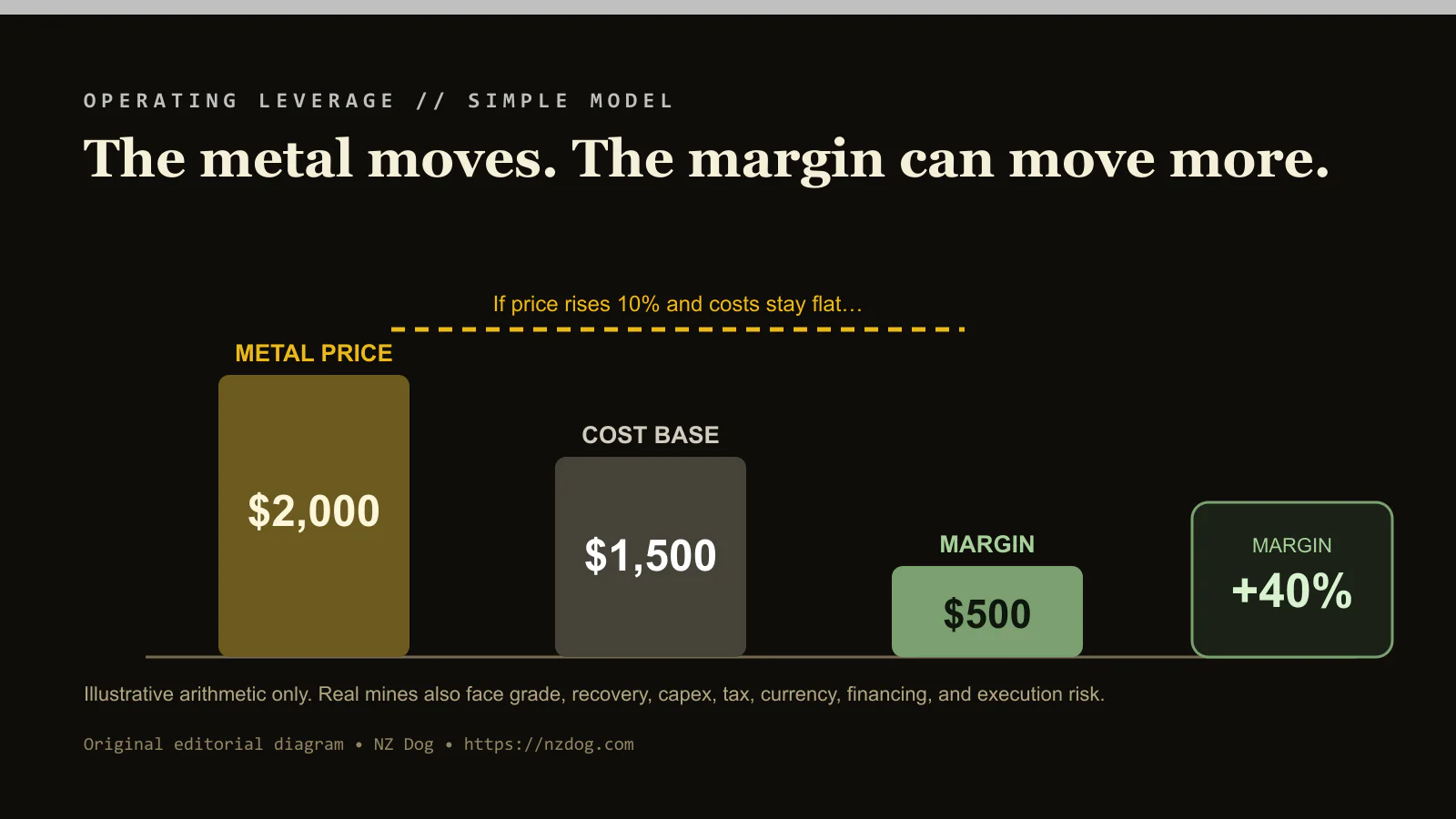
Demand by central banks, investors, jewellery buyers, and technology users affects the market through different channels. Supply includes mine output, recycling, and producer hedging. A strong quarterly demand figure does not guarantee a straight-line price move, and a gold price move does not flow dollar-for-dollar into a miner’s free cash flow.
Treat industry data as dated context. Check the methodology, units, revisions, and whether a headline includes OTC estimates.
Move from spot price to realized revenue
A company may sell at a realized price that differs from the headline spot price because of timing, hedges, concentrate terms, treatment charges, royalties, streaming agreements, or product mix.
Start with reported revenue and payable production. Reconcile those figures to the company’s production report and financial statements.
Follow the cost bridge past AISC
All-in sustaining cost is useful but non-GAAP. It does not automatically include every cash demand on the business. Continue through:
- taxes and royalties;
- interest and debt repayment;
- working-capital changes;
- non-sustaining and growth capital;
- acquisitions and disposals;
- reclamation and closure obligations;
- changes in cash and net debt.
If the gold price rises but cash does not build, identify the line items absorbing the benefit.
Check whether volume is repeatable
A strong quarter can reflect grade sequencing, inventory movements, deferred stripping, favorable currency, or unusually low maintenance. Compare production and cost guidance with at least four quarters of actual results.
For a developer, replace production analysis with permitting, engineering, financing, construction, and commissioning evidence. A higher metal price cannot eliminate those gates.
Put central-bank demand in its proper place
The World Gold Council’s 2026 central-bank survey described continued strategic interest in gold reserves. That may strengthen the long-term sector narrative. It still does not validate an individual resource estimate, mine plan, jurisdiction, management forecast, or valuation.
The investor question is not “Are central banks buying?” It is “What specific evidence connects this macro trend to this company’s per-share outcome?”
A five-line company check
- What metal price and exchange-rate assumptions are in guidance?
- What was realized revenue per payable ounce?
- What changed in production, grade, recovery, and unit cost?
- What cash is required outside sustaining cost?
- After debt and dilution, what is the outcome per share?
Sources
- World Gold Council: Gold Demand Trends Q1 2026
- World Gold Council: Q1 2026 supply
- World Gold Council: Central Bank Gold Reserves Survey 2026
- World Gold Council: Guidance note on AISC and all-in costs
Source check: 1 August 2026. Industry-body data can be revised. Educational research only, not investment advice.
gold demandcentral banksgold minersmining equitiesdue diligence